

As a supplier of SMD 0603 LEDs, I often encounter questions from clients about how to measure the brightness of these tiny yet powerful light - emitting components. In this blog, I'll delve into the various methods and considerations for measuring the brightness of SMD 0603 LEDs.
Understanding SMD 0603 LEDs
Before we jump into the measurement techniques, let's briefly understand what SMD 0603 LEDs are. The "0603" refers to the physical dimensions of the LED chip in the imperial system, which is approximately 0.06 inches by 0.03 inches or 1.6mm by 0.8mm in the metric system. These LEDs are widely used in a variety of applications, including backlighting for LCD screens, indicator lights in electronic devices, and decorative lighting due to their small size, low power consumption, and long lifespan.
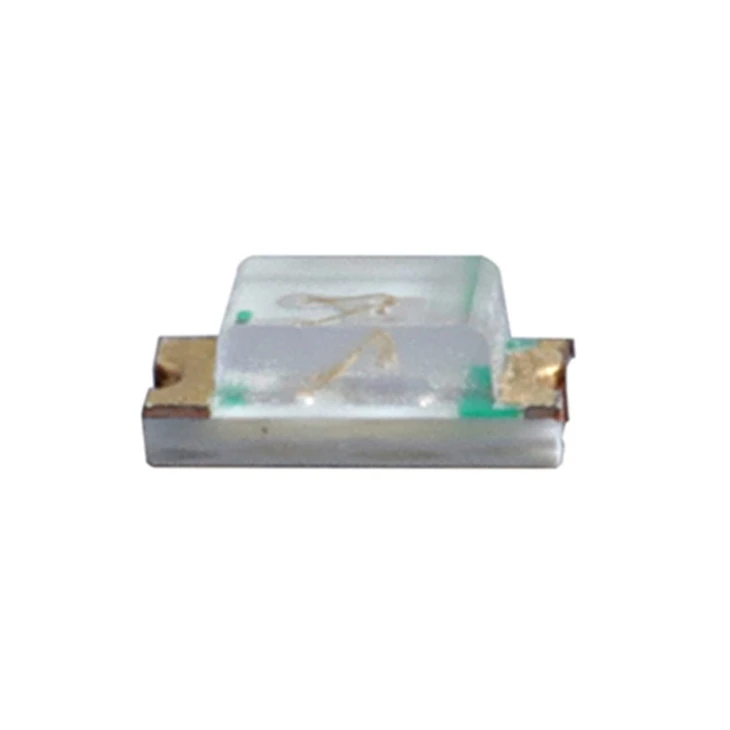
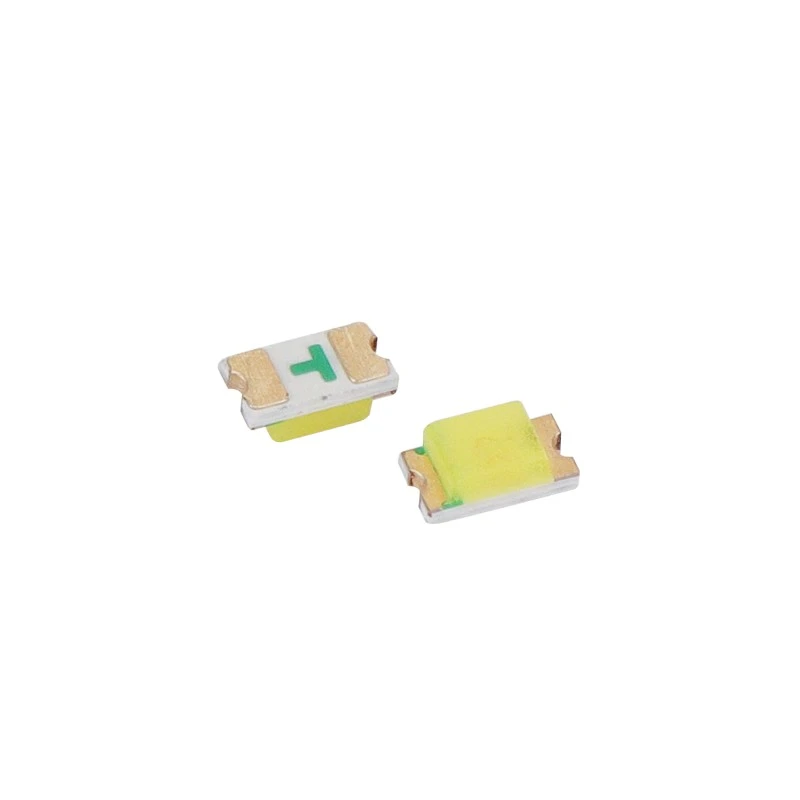
We offer a wide range of SMD 0603 LEDs, such as 1608 Smd Chip Led, Warm White 1608 Led, Red SMD 0603 LED, Orange SMD 0603 LED, and 0603 Smd Led Chip Green. Each type has its own unique brightness characteristics, and accurate measurement is crucial for ensuring they meet the requirements of different applications.
Key Concepts in Measuring LED Brightness
There are several key concepts that are essential to understand when measuring the brightness of SMD 0603 LEDs:
Luminous Flux
Luminous flux, measured in lumens (lm), is a measure of the total amount of light emitted by a light source in all directions. It gives an overall indication of the brightness of the LED. For SMD 0603 LEDs, the luminous flux can vary depending on the color, the quality of the semiconductor materials used, and the driving current.
Luminous Intensity
Luminous intensity, measured in candelas (cd), is the amount of light emitted by a light source in a particular direction. Since SMD 0603 LEDs are often used in directional lighting applications, luminous intensity is an important parameter. For example, in an indicator light application, the luminous intensity in the direction where the user is likely to view the light is crucial.
Illuminance
Illuminance, measured in lux (lx), is the amount of light that falls on a surface. It is related to the distance from the light source and the luminous intensity. In practical applications, the illuminance provided by an SMD 0603 LED on a target surface needs to be sufficient for the intended use.
Measurement Methods
Using a Spectroradiometer
A spectroradiometer is a highly accurate instrument for measuring the spectral power distribution of an LED. It can provide detailed information about the wavelengths of light emitted by the SMD 0603 LED, as well as the luminous flux and luminous intensity.
To measure the brightness of an SMD 0603 LED using a spectroradiometer, follow these steps:
- Prepare the sample: Mount the SMD 0603 LED on a suitable test board and ensure it is properly connected to a power supply. Set the driving current to the specified value for the LED.
- Calibrate the spectroradiometer: Follow the manufacturer's instructions to calibrate the spectroradiometer. This usually involves using a standard light source to ensure accurate measurements.
- Position the LED: Place the LED at the correct distance and angle from the spectroradiometer's detector. The distance and angle should be consistent with the measurement conditions specified by the instrument.
- Take the measurement: Start the measurement on the spectroradiometer. The instrument will analyze the light emitted by the LED and provide data on its spectral characteristics, luminous flux, and luminous intensity.
The advantage of using a spectroradiometer is its high accuracy. It can provide detailed information about the LED's performance, which is useful for research and development, as well as for quality control. However, spectroradiometers are relatively expensive and require some technical expertise to operate.
Using a Luminance Meter
A luminance meter is a more portable and cost - effective option for measuring the brightness of SMD 0603 LEDs. It measures the luminance of a light source, which is the amount of light emitted per unit area in a particular direction, and is measured in candelas per square meter (cd/m²).
To measure the brightness of an SMD 0603 LED using a luminance meter:
- Power the LED: Supply the LED with the appropriate voltage and current. Make sure the LED reaches a stable operating state.
- Position the luminance meter: Point the luminance meter's sensor directly at the LED. Keep the distance and angle between the meter and the LED consistent during the measurement.
- Take the reading: Press the measurement button on the luminance meter to obtain the luminance value. This value can give you an indication of the apparent brightness of the LED as seen from a particular direction.
Luminance meters are easy to use and can provide quick measurements. However, they may not provide as detailed information as spectroradiometers, especially in terms of spectral characteristics.
Using a DIY Photodiode Circuit
For those on a tight budget or who want to conduct basic brightness measurements, a DIY photodiode circuit can be a viable option. A photodiode is a semiconductor device that generates a current when exposed to light.
Here's how you can measure the brightness of an SMD 0603 LED using a photodiode circuit:
- Build the circuit: Connect a photodiode to a resistor and a voltmeter. The photodiode will generate a current proportional to the light intensity it receives. The resistor converts this current into a voltage, which can be measured by the voltmeter.
- Power the LED: Connect the SMD 0603 LED to a power supply and set the appropriate current.
- Measure the voltage: Place the photodiode in front of the LED and measure the voltage across the resistor. The higher the voltage, the brighter the LED.
This method is simple and inexpensive, but it has limitations in terms of accuracy. The measurement results can be affected by ambient light, the sensitivity of the photodiode, and the calibration of the circuit.
Factors Affecting the Brightness Measurement
When measuring the brightness of SMD 0603 LEDs, there are several factors that can affect the accuracy of the measurement:
Driving Current
The brightness of an SMD 0603 LED is directly related to the driving current. As the current increases, the brightness of the LED also increases. However, exceeding the maximum rated current can damage the LED and affect its lifespan. Therefore, it is important to measure the brightness at the specified driving current.
Temperature
The temperature of the LED can also affect its brightness. Generally, as the temperature increases, the brightness of the LED decreases. This is known as thermal quenching. When measuring the brightness, it is important to control the temperature of the LED to ensure consistent results.
Ambient Light
Ambient light can interfere with the brightness measurement. To minimize the effect of ambient light, measurements should be conducted in a dark environment or using a light - shielded enclosure.
Conclusion
Measuring the brightness of SMD 0603 LEDs is an important process for ensuring the quality and performance of these components. Whether you are using a high - end spectroradiometer, a portable luminance meter, or a DIY photodiode circuit, it is crucial to understand the key concepts of brightness measurement and the factors that can affect the results.
As a supplier of SMD 0603 LEDs, we are committed to providing high - quality products that meet the brightness requirements of our customers. If you have any questions about our products or need assistance with brightness measurement, please feel free to contact us. We are more than happy to discuss your specific needs and help you find the perfect SMD 0603 LEDs for your applications.
References
- "LED Lighting Handbook", published by the Illuminating Engineering Society.
- "Semiconductor Optoelectronics: Physics and Technology" by S. O. Kasap.