

Hello ,This is ZHIDINGLED from China.When it comes to underwater lighting, SMD LEDs are becoming a popular choice due to their energy - efficiency, long lifespan, and compact size. As an SMD LED supplier, I've had numerous inquiries about the waterproof requirements for these LEDs in underwater lighting applications. So, let's dive right in and explore what these requirements are.
Understanding the Basics of SMD LEDs in Underwater Lighting
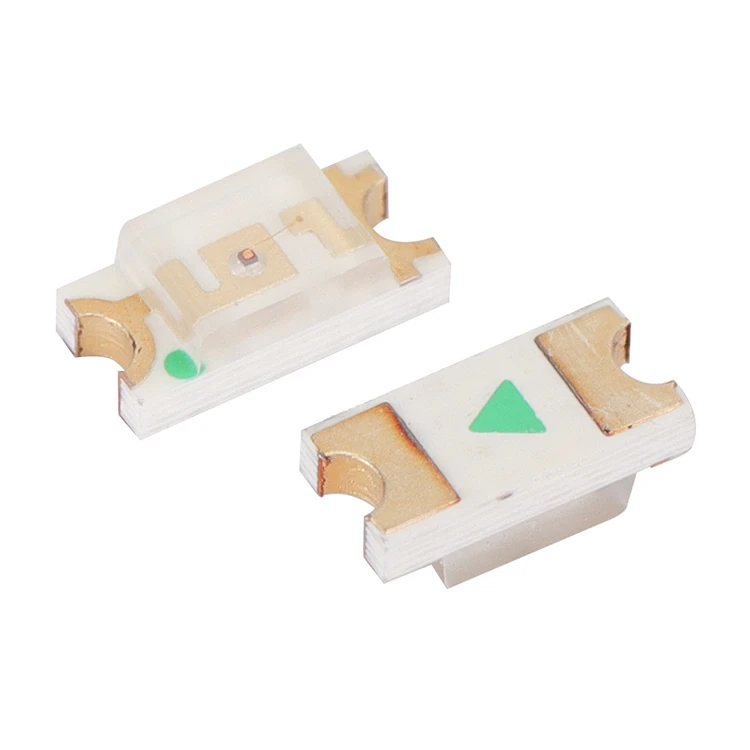
SMD (Surface - Mount Device) LEDs are tiny light - emitting diodes that are directly mounted onto a printed circuit board (PCB). They come in various sizes and colors, such as the White SMD LED 0805, 0805 Red White Led, and Yellow 0602 LED. These LEDs are widely used in underwater lighting for aquariums, swimming pools, fountains, and even in some marine applications.
The main challenge with using SMD LEDs underwater is protecting them from water damage. Water can cause short - circuits, corrosion, and ultimately lead to the failure of the LEDs. Therefore, proper waterproofing is crucial to ensure the longevity and performance of the lighting system.
IP Rating: The Key Indicator of Waterproofing
The Ingress Protection (IP) rating is a standard used to define the degree of protection provided by an enclosure against the intrusion of solid objects (like dust) and liquids (like water). It consists of two digits. The first digit represents the protection against solids, and the second digit represents the protection against liquids.

For underwater lighting, we're mainly concerned with the second digit. Here's a quick breakdown of what different second - digit ratings mean:
- IPX0: No protection against water. Clearly, this is not suitable for underwater applications.
- IPX1: Protected against vertically falling drops of water. This is also not enough for underwater use.
- IPX2: Protected against vertically falling drops of water when the enclosure is tilted up to 15 degrees. Again, not suitable for underwater environments.
- IPX3: Protected against spraying water at an angle up to 60 degrees from the vertical. Still not sufficient for full - time underwater use.
- IPX4: Protected against splashing water from any direction. While better, it's still not ideal for long - term underwater applications.
- IPX5: Protected against water jets from any direction. This is a step closer, but for complete submersion, we need a higher rating.
- IPX6: Protected against powerful water jets from any direction. This is getting better but may not be enough for deep - water or long - term underwater use.
- IPX7: Protected against the effects of temporary immersion in water up to 1 meter for 30 minutes. This is a common rating for many underwater lighting applications, but for more demanding situations, we need even more protection.
- IPX8: Protected against continuous immersion in water under conditions specified by the manufacturer. This is the ideal rating for most underwater lighting applications.
Methods of Waterproofing SMD LEDs
There are several ways to achieve the necessary waterproofing for SMD LEDs in underwater lighting.
Potting
Potting involves encapsulating the SMD LEDs and the PCB in a waterproof resin. This resin acts as a barrier between the LEDs and the water. It not only protects the LEDs from water but also provides mechanical support and can improve heat dissipation. There are different types of potting resins available, such as epoxy and silicone. Epoxy resins are known for their high strength and good adhesion, while silicone resins are more flexible and have better resistance to temperature changes.
Gasketing
Gasketing is another common method. A rubber or silicone gasket is placed around the enclosure of the LED lighting system. The gasket creates a seal that prevents water from entering the enclosure. This method is often used in combination with other waterproofing techniques to provide an extra layer of protection.
Encapsulation
Encapsulation is similar to potting but usually involves a more complete enclosure. The SMD LEDs are placed inside a waterproof housing, which can be made of plastic or metal. The housing is then sealed to prevent water from getting in. This method is particularly useful for protecting the LEDs from harsh underwater environments.
Environmental Considerations
The waterproof requirements for SMD LEDs can also be affected by the specific underwater environment. For example, in saltwater environments, the LEDs need to be protected not only from water but also from the corrosive effects of salt. Special coatings or materials may be required to prevent corrosion.
In addition, the depth at which the LEDs will be used is also important. At greater depths, the water pressure increases, which can put additional stress on the waterproofing system. The enclosure and the waterproofing materials need to be able to withstand this pressure without failing.
Quality Control and Testing
As an SMD LED supplier, we take quality control very seriously. Before our LEDs are used in underwater lighting applications, they undergo rigorous testing to ensure they meet the required waterproof standards. This includes testing the IP rating, as well as checking for any signs of water ingress or corrosion after exposure to water.
We also provide detailed documentation about the waterproofing capabilities of our LEDs, so our customers can make informed decisions when choosing the right LEDs for their underwater lighting projects.
Conclusion
In conclusion, the waterproof requirements for SMD LEDs in underwater lighting are quite strict. An IPX8 rating is often the ideal standard for most applications. Using methods like potting, gasketing, and encapsulation can help achieve the necessary waterproofing. Environmental factors such as saltwater and water pressure also need to be considered.
If you're in the market for high - quality SMD LEDs for your underwater lighting project, don't hesitate to reach out. We're here to provide you with the best products and support. Whether you need White SMD LED 0805, 0805 Red White Led, or Yellow 0602 LED, we've got you covered. Let's start a conversation about your specific needs and how we can help you create the perfect underwater lighting solution.
References
- "LED Lighting Handbook", Third Edition, by Bob Johnstone.
- "Underwater Lighting Design Guide", published by the Lighting Industry Association.