

In the world of LED lighting, the question of whether 2mm Dip LEDs can be used in series is a topic that often arises among designers, engineers, and hobbyists alike. As a supplier of high - quality 2mm Dip LEDs, I'm here to delve into this subject and provide you with comprehensive insights.
Understanding 2mm Dip LEDs
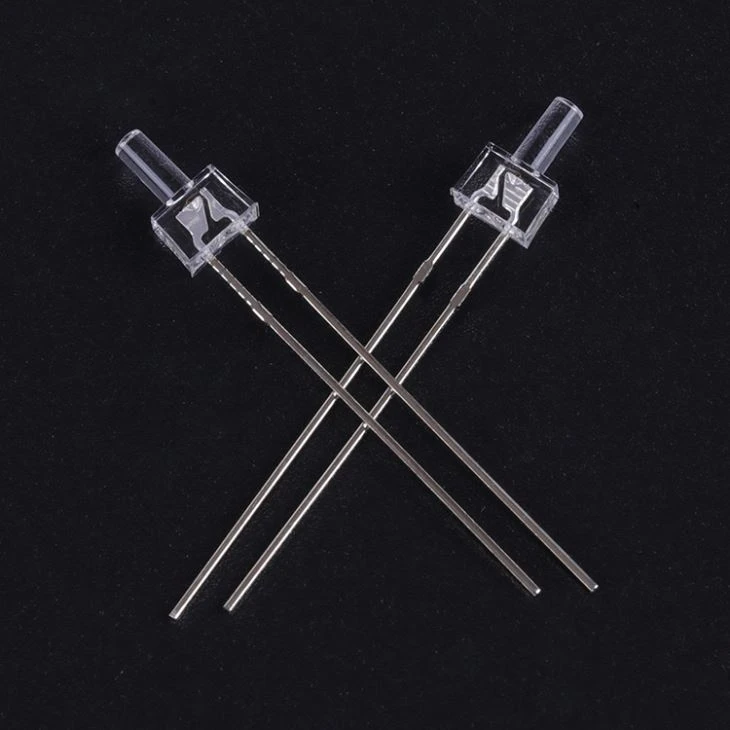
Before we explore the possibility of using them in series, let's first understand what 2mm Dip LEDs are. These are through - hole LEDs with a diameter of 2mm. They are known for their compact size, which makes them suitable for a wide range of applications, from small electronic devices to intricate lighting designs. You can find a variety of these LEDs on our website, such as 2mm And Smaller LEDs. These LEDs are available in different colors, including green, red, white, and amber, each with its own unique electrical characteristics and visual effects.
Electrical Characteristics of 2mm Dip LEDs
To determine if 2mm Dip LEDs can be used in series, we need to understand their electrical properties. The key parameters to consider are forward voltage (Vf) and forward current (If). The forward voltage is the voltage required to make the LED conduct electricity and emit light, while the forward current is the amount of current that passes through the LED.
For example, a typical 2mm Green LED might have a forward voltage of around 2.2 - 2.6V and a forward current of 20mA. These values can vary depending on the specific model and manufacturer. A 2mm Tower Red LED may have a lower forward voltage, typically around 1.8 - 2.2V. And a 2mm White LED usually has a higher forward voltage, often in the range of 3 - 3.6V.
Using 2mm Dip LEDs in Series: The Basics
When LEDs are connected in series, the same current flows through each LED, and the total voltage across the series combination is the sum of the forward voltages of each individual LED. For instance, if you have three 2mm Green LEDs with a forward voltage of 2.4V each and you connect them in series, the total forward voltage required for the combination will be 2.4V + 2.4V+ 2.4V = 7.2V.
The advantage of connecting LEDs in series is that it allows you to drive multiple LEDs with a single current source. This can simplify the circuit design and reduce the number of components required. However, it also means that if one LED fails (opens), the entire series circuit will stop working.
Advantages of Series Connection
- Simplified Circuit: As mentioned earlier, using LEDs in series can simplify the circuit design. You only need one current - limiting resistor for the entire series string, rather than a separate resistor for each LED. This can save space on the printed circuit board (PCB) and reduce the overall cost of the project.
- Uniform Current: Since the same current flows through each LED in a series circuit, the brightness of the LEDs is more likely to be uniform. This is especially important in applications where consistent lighting is required, such as in display panels or indicator lights.
Challenges of Series Connection
- Voltage Requirements: One of the main challenges of using LEDs in series is the increased voltage requirement. As you add more LEDs to the series string, the total forward voltage increases. You need to ensure that your power supply can provide a voltage that is high enough to drive the entire series combination. For example, if you want to connect ten 2mm White LEDs with a forward voltage of 3.2V each, you will need a power supply that can provide at least 32V.
- LED Mismatch: In a series circuit, if the forward voltages of the LEDs are not well - matched, some LEDs may receive more voltage and current than others. This can lead to uneven brightness and may even cause some LEDs to fail prematurely. It's important to select LEDs with similar forward voltage characteristics to minimize this issue.
Practical Considerations
When using 2mm Dip LEDs in series, there are several practical considerations to keep in mind:

- Current Limiting: Even when using LEDs in series, it's crucial to limit the current to prevent damage to the LEDs. You can use a current - limiting resistor in the circuit. The value of the resistor can be calculated using Ohm's law, based on the power supply voltage, the total forward voltage of the series LEDs, and the desired forward current.
- Heat Dissipation: LEDs generate heat when they are in use. In a series circuit, the heat generated by each LED can add up, especially if there are many LEDs in the string. Make sure that your circuit has proper heat dissipation mechanisms, such as heat sinks or ventilation, to prevent the LEDs from overheating.
Examples of Applications
2mm Dip LEDs connected in series can be used in a variety of applications. For example, in small - scale indicator lights for electronic devices, a series of these LEDs can be used to create a visual indication of the device's status. In decorative lighting, a series of 1.8mm tower top led can be arranged to create a unique lighting effect.
Conclusion
In conclusion, 2mm Dip LEDs can indeed be used in series, but it requires careful consideration of their electrical characteristics, the voltage requirements of the power supply, and the potential challenges such as LED mismatch and heat dissipation. When properly designed, a series connection of 2mm Dip LEDs can offer a simple and efficient way to achieve uniform lighting in various applications.
If you are interested in purchasing 2mm Dip LEDs for your projects, whether you plan to use them in series or in other configurations, we are here to assist you. Our team of experts can provide you with detailed product information, help you select the right LEDs for your needs, and offer technical support throughout your project. Contact us to start a procurement discussion and take the first step towards bringing your lighting ideas to life.
References
- "LED Handbook", published by a leading semiconductor manufacturer.
- Various technical datasheets of 2mm Dip LEDs from different manufacturers.