

In the world of infrared (IR) technology, the 3535 IR LED stands out as a versatile and widely used component. Many customers come to us, as a 3535 IR LED supplier, with questions about its voltage rating. Understanding this crucial parameter is essential for proper application and optimal performance. In this blog post, we'll delve into the details of the voltage rating of 3535 IR LEDs, its significance, and how it relates to other aspects of these components.
What is a 3535 IR LED?
First, let's briefly introduce what a 3535 IR LED is. The "3535" refers to the package size of the LED, which is 3.5mm x 3.5mm. This compact form factor makes it suitable for a variety of applications where space is limited, such as in security cameras, sensor systems, and automotive applications. IR LEDs emit infrared light, which is invisible to the human eye but can be detected by appropriate sensors.
Understanding Voltage Rating
The voltage rating of an LED is the amount of voltage that should be applied across the LED to operate it safely and efficiently. For a 3535 IR LED, the typical forward voltage (Vf) usually ranges from around 1.2V to 1.6V. However, this value can vary depending on several factors, including the specific manufacturing process, the wavelength of the infrared light emitted, and the forward current (If) flowing through the LED.
The forward voltage is the voltage drop across the LED when it is conducting current in the forward direction. It is an important parameter because if the applied voltage is too low, the LED may not emit enough light or may not turn on at all. On the other hand, if the voltage is too high, it can cause excessive current to flow through the LED, leading to overheating, reduced lifespan, or even permanent damage.

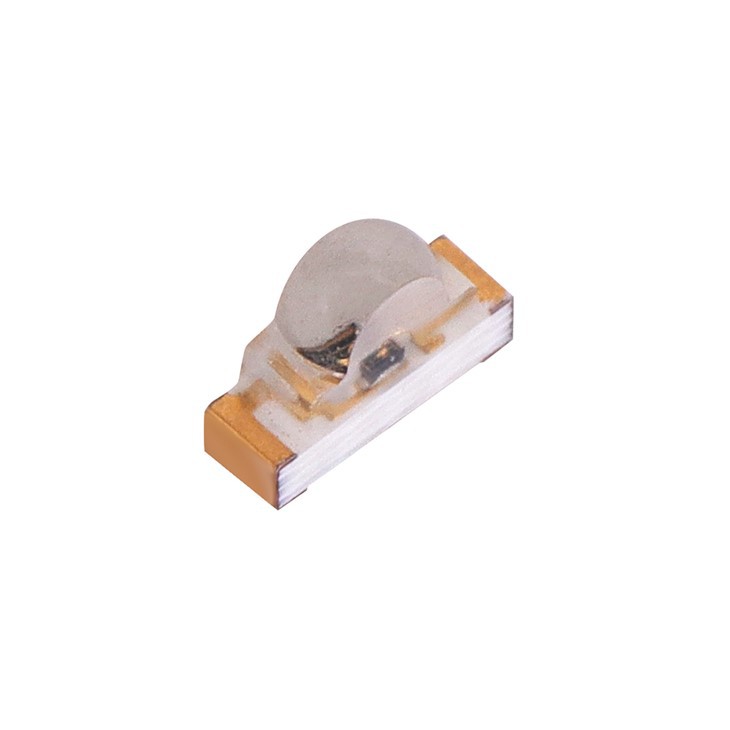
Factors Affecting Voltage Rating
Manufacturing Process
Different manufacturers may use slightly different materials and processes in the production of 3535 IR LEDs. These variations can result in differences in the forward voltage. For example, some advanced manufacturing techniques may allow for more precise control of the semiconductor properties, leading to a more consistent forward voltage across a batch of LEDs.
Wavelength
The wavelength of the infrared light emitted by the LED also affects its forward voltage. Generally, longer - wavelength IR LEDs tend to have slightly lower forward voltages compared to shorter - wavelength ones. This is because the energy of the photons emitted is related to the wavelength, and the forward voltage is related to the energy required to generate those photons.
Forward Current
The forward current flowing through the LED has a direct impact on the forward voltage. As the forward current increases, the forward voltage also increases. This relationship is not linear but can be approximated by the LED's forward voltage - current characteristic curve. When designing a circuit with a 3535 IR LED, it is important to choose an appropriate current - limiting resistor to ensure that the LED operates within its specified current range, which in turn affects the applied voltage.
Importance of Correct Voltage Application
Using the correct voltage for a 3535 IR LED is crucial for several reasons. Firstly, it ensures the reliable and long - term operation of the LED. By keeping the voltage within the specified range, we can prevent premature failure due to overheating or electrical stress. Secondly, it helps to maintain the desired level of infrared light output. If the voltage is too low, the light output may be insufficient for the intended application, such as in a security camera where proper illumination is necessary for clear imaging.
Other Related IR Components
In addition to the 3535 IR LED, we also supply a range of other infrared components, which can be used in conjunction with our 3535 LEDs in various applications. For example, the SMD 0802 Side View Phototransistor PT LED is a useful component for detecting infrared light. It can be paired with a 3535 IR LED in a sensing system to detect the presence or absence of an object based on the reflection of infrared light.
The 0603 IR LED is another option for applications where an even smaller package size is required. Its compact design makes it suitable for use in portable devices or in circuits with high component density.
The SMD 4154 Dual Photodiode LED can be used for more complex sensing applications, such as in multi - channel detection systems. It provides dual photodiode functionality, which can enhance the accuracy and reliability of the sensing process.
The SMD 0802 Side View IR LED offers a side - view emission pattern, which can be beneficial in applications where the light needs to be emitted at an angle. This type of LED can be used in side - lit displays or in some automotive sensor applications.
The Smd Side View Infrared Led is also a popular choice for applications that require a side - view infrared light source. It can be used in combination with other components to create a customized infrared sensing or illumination solution.
How to Determine the Voltage for a Specific Application
When designing a circuit with a 3535 IR LED, it is important to consider the specific requirements of the application. First, determine the desired forward current based on the required light output. The datasheet of the LED provides information about the relationship between the forward current and the light intensity. Once the forward current is determined, the forward voltage can be estimated from the forward voltage - current characteristic curve provided in the datasheet.
To ensure that the LED operates at the correct voltage and current, a current - limiting resistor is typically used in series with the LED. The value of the resistor can be calculated using Ohm's law, based on the supply voltage, the forward voltage of the LED, and the desired forward current.
Conclusion and Call to Action
In summary, the voltage rating of a 3535 IR LED is an important parameter that affects its performance and lifespan. By understanding the factors that influence the voltage rating and how to apply the correct voltage, you can ensure the optimal operation of your infrared applications.
As a professional 3535 IR LED supplier, we are committed to providing high - quality components and technical support to our customers. Whether you are working on a new product development or looking to improve an existing system, we have the expertise and products to meet your needs. If you have any questions about the voltage rating of 3535 IR LEDs or our other infrared components, or if you are interested in placing an order, please feel free to contact us for a detailed discussion. We look forward to working with you to achieve your project goals.
References
- "LED Handbook", Electronics Industry Publications
- Manufacturer datasheets for 3535 IR LEDs
- Circuit design textbooks on semiconductor devices and optoelectronics