

As a supplier of SMD LEDs, I often encounter questions from customers about the moisture sensitivity level (MSL) of SMD LEDs. Understanding MSL is crucial for ensuring the quality and reliability of SMD LEDs in various applications. In this blog, I will delve into what MSL is, its significance for SMD LEDs, and how it impacts the handling and storage of these components.
What is Moisture Sensitivity Level (MSL)?
Moisture sensitivity level is a classification system defined by the Joint Electron Device Engineering Council (JEDEC). It indicates the susceptibility of a surface - mount device (SMD) to damage from moisture absorption during the soldering process. When an SMD component absorbs moisture, the trapped water vapor can expand rapidly during the high - temperature soldering process, causing internal stresses that may lead to delamination, cracking, or other forms of damage to the device.
The MSL classification ranges from 1 to 6, with MSL 1 being the least sensitive and MSL 6 being the most sensitive. Each level has specific conditions regarding the maximum exposure time to ambient air and the required baking conditions before soldering.
- MSL 1: Components with MSL 1 can be stored and handled indefinitely at less than 30°C/85% relative humidity (RH) without the need for special baking before soldering.
- MSL 2: These components can be exposed to ambient air (less than 30°C/60% RH) for up to one year before soldering. If the exposure time exceeds this limit, they need to be baked at a specified temperature and time.
- MSL 2a: Components can be exposed to ambient air (less than 30°C/60% RH) for up to 4 weeks. Beyond this, baking is required.
- MSL 3: The maximum exposure time to ambient air (less than 30°C/60% RH) is 168 hours (1 week).
- MSL 4: Components can be exposed to ambient air (less than 30°C/60% RH) for 72 hours (3 days).
- MSL 5: The maximum exposure time to ambient air (less than 30°C/60% RH) is 48 hours (2 days).
- MSL 6: These components are extremely sensitive. They must be baked and then soldered within a specified time frame, usually with a time - to - solder label attached.
MSL of SMD LEDs
SMD LEDs typically have different MSL ratings depending on their package type, design, and manufacturing process. Generally, most SMD LEDs fall within the MSL 2 to MSL 3 range.
The moisture sensitivity of SMD LEDs is mainly related to the materials used in their construction. For example, the encapsulant material, which protects the LED chip, can absorb moisture. If the moisture content is too high during soldering, the expansion of water vapor can cause the encapsulant to delaminate from the chip or the lead frame, leading to reduced light output, color shift, or even complete failure of the LED.
Let's take a look at some of our popular SMD LED products and their MSL considerations:
- 1615 two color chip Led: This type of LED is designed for various applications where two - color indication is required. With its compact size and reliable performance, it is important to handle it according to its MSL rating. Usually, it has an MSL of around 3, which means it should be used within 168 hours of exposure to ambient air (less than 30°C/60% RH).
- Tri Color 1010 RGB LED: RGB LEDs are widely used in display and lighting applications. The 1010 RGB LED has a relatively small form factor but high brightness. Its MSL rating is also typically in the MSL 2 - 3 range. Proper storage and handling are essential to maintain its performance and reliability.
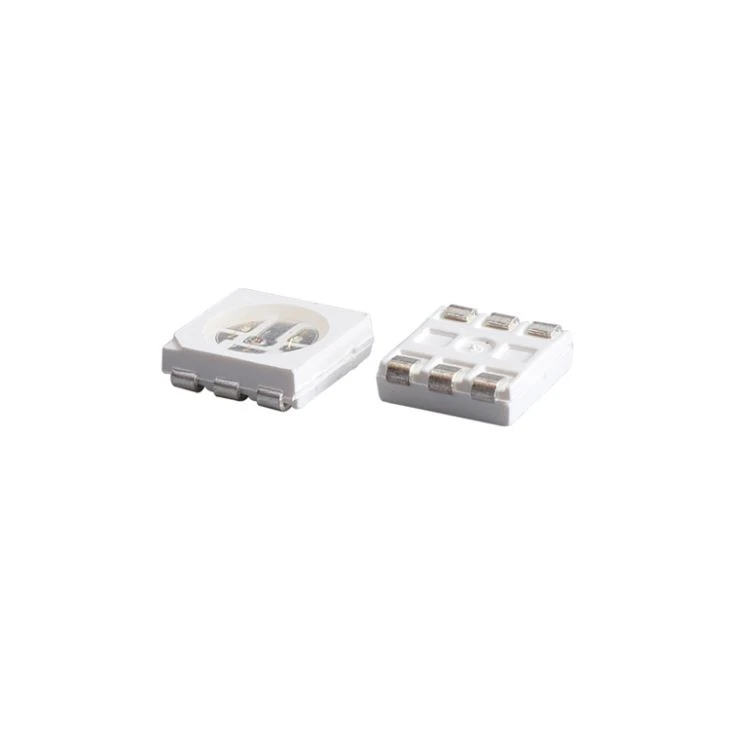
- SMD 5050 RGB For Strip Display Screen: SMD 5050 RGB LEDs are commonly used in LED strips for display screens. They have a larger package size compared to some other SMD LEDs, but they are still sensitive to moisture. The MSL rating for these LEDs is often around MSL 3, and following the recommended handling procedures is crucial to prevent moisture - related damage.
Impact on Handling and Storage
The MSL of SMD LEDs has a significant impact on how they should be handled and stored. Here are some key points to consider:
Storage
- Sealed Packaging: SMD LEDs are usually supplied in moisture - barrier bags with a desiccant and a humidity indicator card. The desiccant helps to absorb any moisture inside the bag, and the humidity indicator card shows the moisture level. It is important to keep the LEDs in their original sealed packaging until they are ready to be used.
- Temperature and Humidity Control: The storage environment should be kept at a low temperature and humidity. A temperature of less than 30°C and a relative humidity of less than 60% are generally recommended. If the storage conditions are not ideal, the LEDs may absorb moisture more quickly, reducing their shelf life.
Handling
- Exposure Time: Once the moisture - barrier bag is opened, the exposure time to ambient air should be strictly controlled according to the MSL rating. If the exposure time exceeds the limit, the LEDs need to be baked before soldering.
- Baking Process: Baking is a process of removing moisture from the LEDs. The baking temperature and time depend on the MSL rating. For example, for MSL 3 components, a typical baking condition might be 125°C for 24 hours. It is important to follow the manufacturer's recommended baking procedures to avoid over - baking or under - baking.
Importance of MSL in SMD LED Applications
In various applications, such as automotive lighting, consumer electronics, and industrial lighting, the reliability of SMD LEDs is of utmost importance. Moisture - related damage can lead to product failures, which can be costly in terms of both repair and replacement.
For automotive lighting, SMD LEDs need to withstand harsh environmental conditions, including temperature variations and humidity. If the LEDs are not properly handled according to their MSL rating, they may fail prematurely, affecting the safety and performance of the vehicle.
In consumer electronics, such as smartphones and tablets, SMD LEDs are used for backlighting and indicator lights. Any failure of these LEDs can result in a poor user experience. Therefore, understanding and following the MSL requirements is essential to ensure the long - term reliability of these products.
Conclusion
As a supplier of SMD LEDs, we understand the importance of moisture sensitivity level in ensuring the quality and reliability of our products. By providing our customers with clear information about the MSL ratings of our SMD LEDs and the recommended handling and storage procedures, we aim to help them make the most of our products.
If you are interested in purchasing SMD LEDs for your application, we are here to assist you. Our team of experts can provide you with detailed information about the MSL ratings of our products and offer guidance on handling and storage. We are committed to providing high - quality SMD LEDs that meet your specific requirements. Contact us today to start a discussion about your SMD LED needs.

References
- Joint Electron Device Engineering Council (JEDEC) standards on moisture sensitivity classification.
- Technical documentation from SMD LED manufacturers.